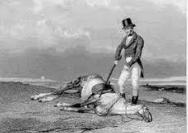
My arm's getting tired

What's the right metaphor?  Am I beating a dead horse or what?

As a person who has been engaged in public policy in a multitude of industries for well over three decades, I remain shocked at the lack of rigor involved in such matters in the health care field.  The issue is this:  There should be a number of preconditions before one seeks to use financial incentives or penalties to influence behavior.  If these conditions are not met, the financial tools will either not work or will have unintended consequences.

What might those conditions be?  Let's start with a few:
1)  Have a clear sense that the metric to be measured is determinative of the result sought.
2)  Ensure that the recipient of the financial payment or debit controls the work flow associated with the metric.
3)  Be confident that the recipient is likely to be influenced in the correct direction by the financial incentive.
4)  Ensure that the amount of the financial incentive is sufficiently meaningful to the recipient that it is likely to influence his or her behavior.
5)  Consider how to avoid the unintended consequences of the financial incentive, e.g., impacts on other metrics that are of concern.

We've talked about this problem with regard to penalizing hospitals for higher than average readmissions.  Now, Kaiser Health News summarizes a recent NEJM article, as follows:  "CMS penalties don't change hospital acquired infection rates."

A Medicare payment policy designed to push hospitals to cut their infection rates has had no effect in reducing two types of preventable infections among patients in intensive care units, researchers say in a study out Wednesday in the New England Journal of Medicine.

“The financial penalty did not further reduce infection rates, which were already going down because of multitude of (infection control) campaigns and interventions that were already ongoing,” said the study’s lead author Grace Lee, associate professor, Harvard Pilgrim Health Care Institute and Harvard Medical School.

Other studies have found the payment policy resulted in increased attention by hospital leaders – sometimes at the expense of other infections not targeted by the policy.

As policy efforts expand, the researchers say “careful evaluation is needed to determine when these programs work … and when they have unintended consequences.”


Piling on, Steffie Woolhandler, Dan Ariely, and David Himmelstein offer insights from behavioral economics in a post on Health Affairs Blog, entitled "Will pay for performance backfire?"  The introduction:

Paying for performance (P4P) has strong intuitive appeal.  Common sense and rigorous studies tell us that paying more for, say, angioplasties or immunizations yields more of them.  So paying doctors and hospitals for better care, not just more of it, seems like a no-brainer.  Yet while Medicare and many private insurers are charging ahead with pay-for-performance (P4P), researchers have been unable to show that it benefits patients.

Findings from the new field of behavioral economics may explain these negative results.  They challenge the traditional economic view that monetary reward is either the only motivator or is simply additive to intrinsic motivators such as purpose or altruism.  Studies have shown that monetary rewards can undermine motivation and worsen performance on cognitively complex and intrinsically rewarding work, suggesting that P4P may backfire.

Further on, they note:

The quality improvement literature has pinpointed many causes of quality breeches in medical care: fatigue; poorly designed workflow and care systems; undue commercial influence; knowledge gaps; memory lapses; reliance on inappropriate heuristics; poor interpersonal skills and insufficient teamwork, to name just a few.  But “not trying” is rarely cited.  Yet P4P implicitly blames lack of motivation for poor quality care.

But even when motivation is the problem, money isn’t always the solution.  Findings from the new field of behavioral economics indicate that performance bonuses often backfire, particularly for cognitively challenging work.

Are there financial incentives that could work in the complex environment of hospitals and physicians' offices?  Maybe so, but they will have to be much better designed that what we have seen so far.  We'll explore this in future posts.

Stunned into silence

I was talking with my soccer buddy Francesco about the common practice of Italians using their arms and hands when talking.  He related this story:

Visiting from Italy before attaining his current position at Harvard, he had gone to Arizona to do a guest lecture.  After a few minutes, a student in the front row interrupted the talk.  She said, "Professor, would you stop moving your arms so much?  Your hands are blocking your mouth.  I am hard of hearing, and I need to be able to see your lips to understand what you are saying."

Francesco reported, "I was stunned by the request.  I had no idea how I could talk!"

How'd you sleep?

How neat is this!  Science, Space & Robots reports:

The Ibis hotel group is installing robots in its Berlin, London and Paris hotels to paint your sleep patterns. Engadget reports that the robots will paint guests sleeping in its Sleep Art rooms. The robots monitor your sleep patterns using 80 sensors embedded in your mattress and then paint them on a black canvas. Take a look.  (Click here if you cannot see the video.)

A tale of two soccer games

If you had ever told me that I would issue a yellow card warning to an 11-year-old for dissent, I would have said you were crazy.  If you had told me that I would officiate a lopsided (6-1) boys high school game without having to yellow card one of those players, I would have been skeptical.  But both happened in the last two days.  The difference was totally based on the demeanor and attitude of the respective coaches.

During the little boys' game, the blue coach would gesture and expostulate whenever a call went the other way.  I'm not talking about major calls.  I'm talking about whether an out-of-bounds was a corner kick or a goal kick, or whether a throw-in went to the orange team or the blue team.  Pretty soon, as you would expect, his boys started to imitate his behavior, whether they were on the sidelines or in the game.  In fact, I told one or two of them to stop doing that and to focus on the playing.  I probably should have talked to the coach about it, but his words were not very loud, and the gestures didn't really interfere with the flow of the game.  There weren't many fouls in the game, and I prefer to let the kids play.

Well, this kind of behavior is contagious, and a coach from the orange team loudly questioned one of my calls--yelling across the entire length and width of the field--and pretty soon the other team's boys were also muttering about minor calls.  Finally, when I called a clear tripping foul on the orange team, one of the fellows yelled out "What!?" in a loud voice, clearly complaining about my call.  Needing an example for all, I called him over, and administered the yellow card for dissent.  He, abashed, said, "I'm sorry," just like an 11-year-old would say.

The referees out there will have advice and thoughts on what I might have done earlier in the game, and may even have thoughts about the efficacy of yellow cards with the age of players.  But the point is that the coaches set the example and tone of this game.  Two excellent groups of young players who would have had a marvelous time in a tight match found themselves judging a referee's calls instead of just playing the game.

A day later, I was officiating at a high school junior varsity game, where the blue team had clearly superior skills and ability compared to the white team.  As the score mounted, 3-1, 4-1, 5-1, the white players were getting more and more frustrated.  With boys this age, the result is often a kind of chippiness and undue aggressiveness.  The other team will then respond in kind.  Kids can get badly hurt at this stage in a high school game.  When I see it developing, I start to use calming words but also position myself ever closer to the play, so I can be on hand to calls fouls more quickly and with greater authority.  Such positioning also sends a message that someone is watching, so the fouls don't occur in the first place. In this case, I was helped by the white coach, who had seen the frustration mounting, too.  He would say, calmly, "Focus on the ball, boys," and other such things.  We got through the last fifteen minutes in the game in fine fashion, and the post-game handshakes were friendly and relaxed.  Again, a coach made a difference, but this time in a positive way.

After the little boys' game, I talked with my high school aged assistant referee and expressed some dismay that the coaches of the top team in each town would behave in such a fashion with 11-year-olds.  He said he had mentioned the problem to another experienced referee with whom he had worked, who commented that there has been a gradual degradation of coaching behavior among the coaches of the under-9 through under-12 teams.  I don't know how to validate whether there is such a trend.  I do know that it is an ineffective way to coach and teaches little boys bad habits that will get them into trouble in later years.

Election talk on WIHI

Friday, October 12, 2012: Navigating the Elections with a Clear-Eyed View
(1:00 – 2:00 PM Eastern Time)


Featuring:
Donald M. Berwick, MD, MPP, Former President and CEO, Institute for Healthcare Improvement; Former Administrator, Centers for Medicare & Medicaid Services
Chris Jennings, President, Jennings Policy Strategies (Washington, DC); Former Senior Health Care Advisor (Domestic Policy & National Economic Councils) to President Bill Clinton

 
We’re just weeks out from the November elections in the US and, depending on the outcome, health care reforms championed by the Obama administration will either continue unabated or possibly face some serious challenges — from a new President or a differently configured Congress. In the midst of this uncertainty, numerous individuals are keeping a close eye on the national policies and initiatives that have done the most of late to accelerate new payment schemes and the redesign of health care delivery, as well as expand insurance coverage.

IHI has two programs this fall to help you navigate this election cycle with a clarity of purpose that health care improvement requires more than ever in these tumultuous times: a WIHI with Dr. Don Berwick and Chris Jennings on October 12 and, on November 8, Out of the Blocks, an in-person, one-day conference in Washington, DC, featuring post-election analysis from Sen. Tom Daschle and Sen. Bill Frist, IHI President and CEO Maureen Bisognano, Virginia Mason CEO Gary Kaplan, and moderated by Don Berwick and NBC’s Nancy Snyderman, MD.

Because health care reform has become such a political flash point, it’s sometimes hard to find the “through line” for the improvement community in particular and the country as a whole. But Don Berwick says this is precisely what needs to happen. Starting with the October 12 WIHI, he’ll explain what “continuity of purpose” might entail in order to stay focused on a robust agenda that includes much greater attention to improving care across the continuum, reducing costs, and helping people and communities lead healthier lives. You can also count on Chris Jennings to summon his 25 years’ worth of experience as a health policy strategist to provide the freshest and most sanguine ways to think about reinventing health care in the US, even when political winds can, and often do, change directions.

Whether you’re steeped in forming an ACO or patient-centered medical home, innovating to improve the patient experience, hard at work on reducing avoidable readmissions, or engaged in any combination of these efforts and more, WIHI host Madge Kaplan invites you to mark your calendars and enroll for a special pre-election WIHI. And don’t forget Out of the Blocks on November 8th, a gathering in DC you won’t want to miss, immediately following the elections.


To enroll in the broadcast, please click here.